In today’s supply chain environment, regional warehousing does far more than lower your transportation spend. It reshapes how you manage risk, how you respond to disruption, and how confidently you can scale.
If you’re responsible for transportation, procurement, or warehouse operations, you know freight volatility isn’t theoretical. It shows up in your budget forecasts. It impacts your service levels. It affects your reputation with customers.
Let’s take a deeper look at why regional warehousing works — and how to structure it in a way that strengthens both your bottom line and your resilience.
The Real Freight Cost Equation
Freight isn’t just rate per mile. It’s:
- Transit distance
- Mode selection
- Fuel exposure
- Accessorials and dwell time
- Expedited shipments
- Inventory carrying costs
- Service penalties
Reducing delivery distance through regional warehousing compresses that entire structure.
Shorter routes mean:
- Greater use of cost-effective LTL and parcel
- Fewer long-haul expedites
- Reduced fuel sensitivity
- Lower reconsignment risk
Those savings compound. And when you’re shipping time-sensitive or temperature-controlled products, the financial impact multiplies.
Risk Reduction And Operational Flexibility
Freight savings matter. But resilience matters more.
Disruption — weather events, port congestion, labor shortages, geopolitical issues — is now part of normal operations. A centralized network increases exposure whereas a regional network distributes it.
With regional warehousing, you can:
- Reposition inventory based on demand shifts
- Redirect freight during regional disruptions
- Reduce reliance on a single port or corridor
- Maintain service levels when one node slows down
That flexibility protects both revenue and reputation.
Getting your shipments where they need to be — on time, in full, and in spec – should be easy with the right partner.
The Strategic Advantage Of The Southeast
Location drives leverage. Our strategically positioned Southeastern warehouse offers proximity to five major ports — including Mobile, Savannah, Panama City, New Orleans, and Jacksonville — along with direct access to a CSX rail line.
From Dothan, Alabama, companies can provide two-day shipping to much of the Southeast and reach 80% of the U.S. within three days .
That changes your freight profile:
- Reduced cross-country shipments
- Shorter lead times to retailers and distribution centers
- Faster ecommerce delivery windows
- Improved inventory turns
And because you’re operating outside a major metropolitan footprint, you gain access to infrastructure without absorbing large-city warehouse costs .
Temperature-Controlled Networks Require Precision
If your products require ambient, refrigerated, or frozen storage, regional positioning becomes even more critical.
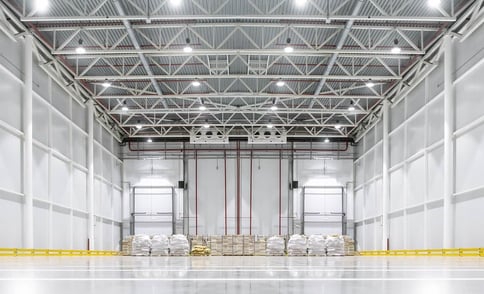
With over 185,000 square feet of refrigerated storage and extensive ambient capacity, a regional distribution node shortens transit windows and reduces exposure to temperature deviations.
Shorter transit equals:
- Lower spoilage risk
- Fewer claims
- Stronger compliance performance
- Greater product integrity
When combined with advanced warehouse management systems that provide real-time inventory visibility and integrations with ERP, ecommerce platforms, and carriers, you move from reactive logistics to controlled execution.
Ecommerce Expectations Are Not Slowing Down
Two-day delivery is no longer a differentiator — it’s expected.
Regional warehousing positions inventory closer to end customers while enabling faster pick, pack, and ship cycles. Integrated systems allow for automated order processing, shipment tracking, and data-driven inventory decisions.
The result:
- Fewer expedited shipments
- Lower last-mile premiums
- Reduced customer service escalations
- More consistent delivery performance
Designing A Network That Creates Advantage
The goal isn’t to add warehouses. It’s to place inventory where it reduces cost and increases control.
For mid-size to large multinational companies — particularly in food and beverage, CPG, health and beauty, nutraceutical, pet supply, and ecommerce — that often means incorporating a strategically located Southeastern regional partner offering:
- Temperature-controlled storage
- Port and rail access
- Scalable ambient capacity
- B2B and ecommerce fulfillment support
When structured correctly, regional warehousing shifts your organization from stressed and reactive to steady and strategic.
From Cost Control To Competitive Strength
Regional warehousing does reduce freight spend.
But more importantly, it:
- Improves service performance
- Increases budget predictability
- Reduces risk exposure
- Strengthens customer relationships
- Enhances supply chain resilience
If you’re evaluating how to reduce freight volatility while improving service reliability, a strategically located temperature-controlled partner in the Southeast may be the lever that brings both cost control and operational stability.
Strengthen Your Supply Chain With A Smarter Regional Strategy
Ready to reduce freight costs and improve delivery performance? Request a quote to see how a strategically located, temperature-controlled partner can support your goals
.jpg?width=50&height=50&name=Jones%2c-Turner-(2017).jpg)